

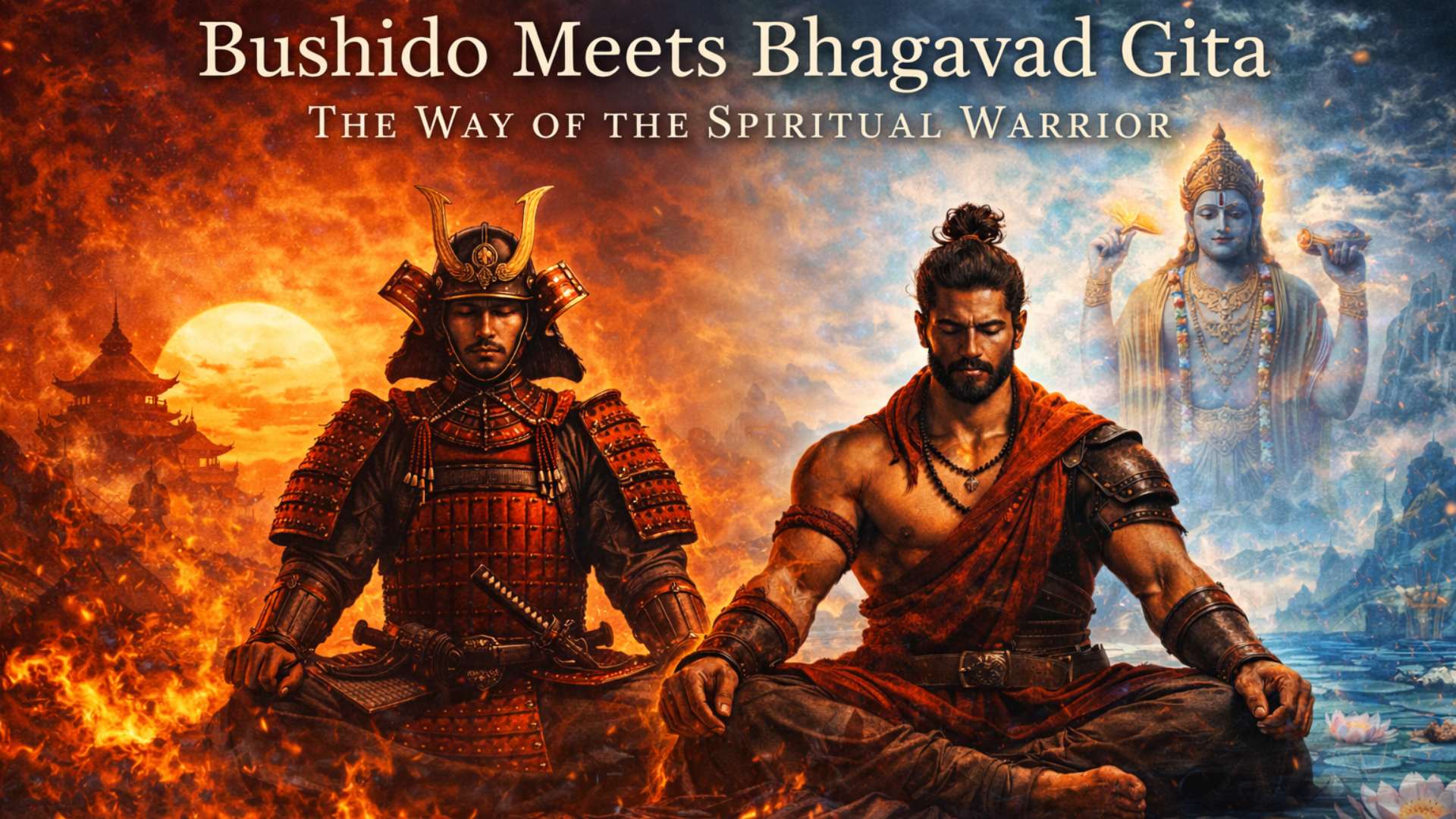
Bushido resonated with me long before I had language for Tantra, Jung, or Dharma.
I was drawn to it as a young man—not because I romanticized violence, but because I desperately needed a code that demanded integrity even when no one was watching.
The pillars that have stayed with me are:
Honor (Meiyo): Not reputation, but internal alignment. Being able to look at myself without flinching.
Rectitude / Right Action (Gi): Doing what is correct even when it is inconvenient, costly, or misunderstood.
Discipline (Jisei): Mastery of self before mastery of others. Control of impulse, not suppression of feeling.
Courage (Yu): Not bravado, but the willingness to act without guarantee of outcome.
Facing Death: This is the most misunderstood. It’s not obsession with dying—it’s living as if today mattered. When you truly accept impermanence, cowardice loses its grip.
Bushido gave me something essential: a structure when everything else felt chaotic. A way to measure myself that didn’t depend on external validation.
That mattered deeply to me.
The Sensei Who Shaped Me
I never trained with a famous samurai master. My teacher was a practicing Buddhist who ran a small dojo and embodied something I’d never seen before:
Stillness under pressure
Discipline without cruelty
Strength without arrogance
What stayed with me wasn’t technique—it was bearing.
How a man enters a room.
How he bows.
How he handles loss.
That shaped me far more than people realize.
Where Bushido Meets the Bhagavad Gita
When I eventually encountered the Bhagavad Gita years later, I recognized the same teaching dressed in different language.
Both traditions teach:
- Act according to duty
- Do not cling to outcome
- Let action arise from alignment, not ego
- Accept the cost of doing what is right
The line that could come from either tradition:
You are responsible for your action, not for how it is received.
The Gita gives this teaching cosmically—through Krishna’s voice, through philosophy, through the battlefield as metaphor.
Bushido gives it somatically—in the body, in consequence, in blood and breath.
Both ask the same question: Can you act with integrity when no option is clean?
Where They Differ (And Why It Matters)
Here’s what I’ve learned living both paths:
Bushido (as I lived it):
- Externally anchored
- Code-driven
- Behavior-first
- Strength emphasized over emotional fluidity
- Mastery through repetition and restraint
The Gita / Tantric Dharma:
- Internally anchored
- Consciousness-driven
- Awareness-first
- Integration of emotion rather than restraint of it
- Liberation through discernment, not just discipline
If Bushido taught me how to stand,
the Gita taught me when to act and when not to.
Bushido made me formidable.
Dharma made me wise.
What “Blending” Actually Looks Like
This is not theoretical for me. It’s how I live.
My daily practice includes:
Morning discipline (Bushido):
Wake early. Practice before comfort. Body before mind. Word before mood.
Discernment before action (Gita):
Asking: Is this dharma—or is this reactivity wearing discipline’s mask?
Martial awareness without martial aggression:
I still train. I still respect weapons. I still carry the warrior in my body.
But I do not live for conflict anymore.
Detachment from outcome:
I act cleanly, then release the need to be understood immediately.
Specific Practices:
From Bushido:
- Structure
- Repetition
- Keeping my word
- Somatic grounding under stress
From Dharma/Tantra:
- Breath-led decision-making
- Waiting for clarity instead of forcing resolution
- Letting discomfort teach instead of overpowering it
- Staying relational even when firm
The blend looks like this: Strong spine, soft front.
The Modern Warrior (2026)
So what does “spiritual warrior” actually mean in 2026?
It means:
- Regulating yourself before trying to regulate others
- Holding power without needing dominance
- Acting with integrity in invisible ways
- Choosing restraint when escalation would be easier
- Leading without outsourcing responsibility or control
The modern warrior:
Doesn’t fight enemies—he confronts patterns
Doesn’t conquer people—he meets systems
Doesn’t perform strength—he embodies steadiness
How This Applies:
In leadership:
Don’t weaponize clarity. Leave room for others’ agency.
In fatherhood:
Model repair, not perfection. Let your children see you learn.
In relationship:
Choose presence over strategy. Curiosity over certainty.
Where These Codes Fail Us
This is important to name.
Ancient warrior codes fail when:
- Discipline replaces attunement
- Duty eclipses emotional truth
- Loyalty suppresses conscience
- Honor becomes rigidity
- Strength becomes identity instead of capacity
Bushido without integration creates stoic men who are respected but not felt.
Dharma without embodiment creates insightful men who avoid responsibility.
Both can bypass intimacy if unexamined.
That’s why the work isn’t just becoming a warrior—it’s learning when the warrior must yield to the lover.
A Personal Story: Choosing Right Action
There have been moments in my life where no option was clean.
One stands out:
I had to act in alignment with my integrity in a relational situation—even knowing it would:
- Cost connection
- Disappoint someone I cared about
- Invite misunderstanding
- Strip me of approval
I acted anyway.
Not because it felt noble. But because not acting would have been a lie.
And there have also been times I didn’t act—held back when clarity was present—and paid for it later in prolonged confusion and erosion of trust.
That’s how I learned this truth:
Right action doesn’t guarantee peace. It guarantees self-respect.
Conscious Action Revisited
So here’s where we land:
The warrior path isn’t about swords anymore—though I still honor them.
It’s about:
- Knowing when to stand
- Knowing when to soften
- Knowing when action is courage
- Knowing when restraint is wisdom
Bushido taught me how to live with honor.
Dharma taught me how to live without illusion.
I’m still blending them.
Still learning where strength must yield to love.
Still walking the edge between discipline and devotion.
That’s not a failure of the path. That is the path.
This Week’s Practice: The Way of Right Action
This week, practice discernment before action:
- When faced with a decision, pause
- Ask yourself three questions:
- Is this action aligned with my values?
- Am I acting from clarity or reactivity?
- Can I stand behind this choice tomorrow, next week, next year?
- Drop into your body:
- If your belly is tight with anxiety → wait
- If your belly is warm and steady → act
- Act decisively, then release attachment to outcome
- Take responsibility for impact, not just intention
This is how conscious warriors move through the world—not perfectly, but with integrity.
Reflection Questions
- Which warrior tradition speaks to you—Bushido’s discipline or the Gita’s detachment?
- Where in your life are you being called to right action, even when no option is clean?
- How do you know when discipline is serving you vs. becoming rigidity?
- What does it mean to be a spiritual warrior in your specific life context?
With the discipline of Bushido and the wisdom of Dharma,
Shiva J
P.S. — This work—integrating ancient warrior wisdom into modern life, learning when to act and when to yield—is exactly what we explore together in community. If you’re ready to walk this path with others who are done performing and ready to embody, perhaps it’s time we schedule a call?
